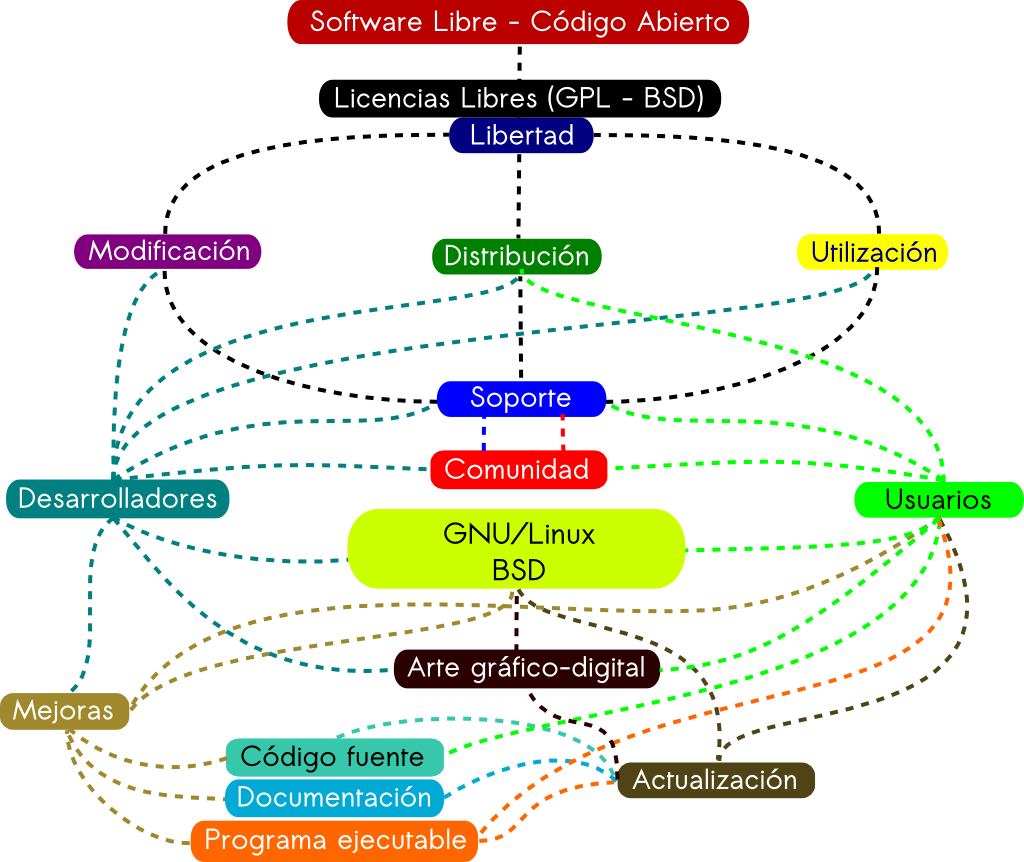
La Free Software Foundation (Fundación para el software libre) es una organización creada en octubre de 1985 por Richard Stallman y otros entusiastas del software libre con el propósito de difundir este movimiento. La Fundación para el software libre (FSF) se dedica a eliminar las restricciones sobre la copia, redistribución, entendimiento, y modificación de programas de computadoras. Con este objeto, promociona el desarrollo y uso del software libre en todas las áreas de la computación, pero muy particularmente, ayudando a desarrollar el sistema operativo GNU. En sus inicios, la FSF destinaba sus fondos principalmente a contratar programadores para que escribiesen software libre. A partir de mediados de la década de 1990 existen ya muchas compañías y autores individuales que escriben software libre, por ello los empleados y voluntarios de la FSF han centrado su trabajo fundamentalmente en asuntos legales, organizativos y promocionales en beneficio de la comunidad de usuarios de software libre. El software libre (en inglés "free software", aunque esta denominación a veces se confunde con "gratis" por la ambigüedad del término "free" en el idioma inglés, por lo que también se usa "libre software") es la denominación del software que respeta la libertad de todos los usuarios que adquirieron el producto y, por tanto, una vez obtenido el mismo puede ser usado, copiado, estudiado, modificado, y redistribuido libremente de varias formas. Según la Free Software Foundation, el software libre se refiere a la libertad de los usuarios para ejecutar, copiar, distribuir, y estudiar el mismo, e incluso modificar el software y distribuirlo modificado. El software libre suele estar disponible gratuitamente, o al precio de costo de la distribución a través de otros medios; sin embargo no es obligatorio que sea así, por lo tanto no hay que asociar software libre a "software gratuito" (denominado usualmente freeware), ya que, conservando su carácter de libre, puede ser distribuido comercialmente ("software comercial"). Análogamente, el "software gratis" o "gratuito" incluye en ocasiones el código fuente; no obstante, este tipo de software no es libre en el mismo sentido que el software libre, a menos que se garanticen los derechos de modificación y redistribución de dichas versiones modificadas del programa. Tampoco debe confundirse software libre con "software de dominio público". Éste último es aquel software que no requiere de licencia, pues sus derechos de explotación son para toda la humanidad, porque pertenece a todos por igual. Cualquiera puede hacer uso de él, siempre con fines legales y consignando su autoría original. Este software sería aquel cuyo autor lo dona a la humanidad o cuyos derechos de autor han expirado, tras un plazo contado desde la muerte de éste, habitualmente 70 años. Si un autor condiciona su uso bajo una licencia, por muy débil que sea, ya no es del dominio público.